Painting and colouring
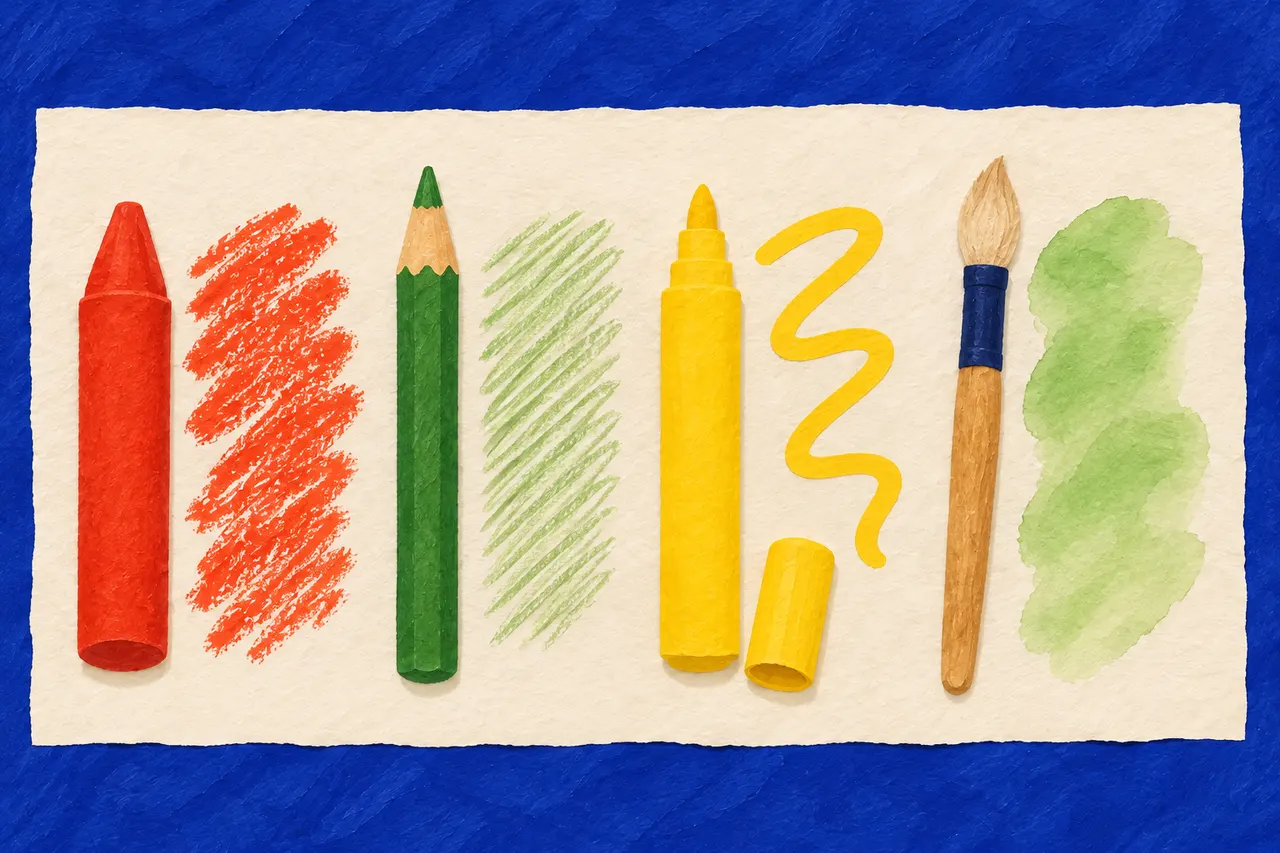
Wax crayons, colour pencils or felt tips?
What suits which age, which paper takes what, and what to do when the colour goes through.
In short
- Wax crayons for the youngest, colour pencils when the lines start to matter, felt tips for bold colours.
- Ordinary printer paper is fine for wax crayons and colour pencils. Felt tips and watercolours prefer thicker paper.
- Did it go wrong? Print the picture again.
Wax crayons
Thick wax crayons sit well in a small hand and do not break as easily. They suit the youngest, who colour with their whole arm, and big areas. Press hard for strong colour and lightly for pale. If a wax crayon snaps, older children can keep colouring with the pieces. Small pieces are a choking hazard, so keep them away from the youngest. Wax crayons work on ordinary paper and never come through it.
Colour pencils
With colour pencils, a child can get close to the lines and colour small areas. The colour is soft and can be built up: lightly first, then once more where it should be darker. Sharpen often and it gets easier. Most of it can be rubbed out, as long as you have not pressed too hard.
Felt tips
Felt tips give strong colours straight away and are fun to fill in with. On thin paper the colour can come through, so put an extra sheet underneath. Do not go over the same spot again and again, or the paper gets wet and fluffy. Choose felt tips that wash out of clothes.
Watercolours and watercolour pencils
Watercolour is lovely but wet. Ordinary paper buckles, so print on thicker paper if the printer can take it. Use a little water and try it in a corner first. It is a good idea to draw with a wax crayon first, since watercolour does not take where the wax is. With watercolour pencils, you colour as usual first and then go over the colour with a lightly damp brush.
Which paper?
- Ordinary printer paper, 80 gsm, is fine for wax crayons and colour pencils.
- Thicker paper is better for felt tips and copes with a little water. Print on one side only.
- How thick a paper the printer takes is in its manual, which also says which tray and which setting the paper needs. It varies a lot from printer to printer.
What the labels mean
Wax crayons, colour pencils and felt tips made for children's play count as toys in the EU (opens in a new window outside Pyssly), but materials for artists do not. The CE mark on the packet then means that the maker declares that they meet the EU's safety rules for toys. Follow the age given there. Small children like to put pencils and pens in their mouths, so thick wax crayons are best to start with.
"Washable" means that the colour comes out of most clothes in the wash, not that it comes off everything.
Did it go wrong?
Colour pencils can be rubbed out if you coloured lightly. Felt tips and wax crayons cannot, but it does not matter: print the picture again. Your own pictures are still in My pictures, and you can print the gallery's pictures as many times as you like.
Next step
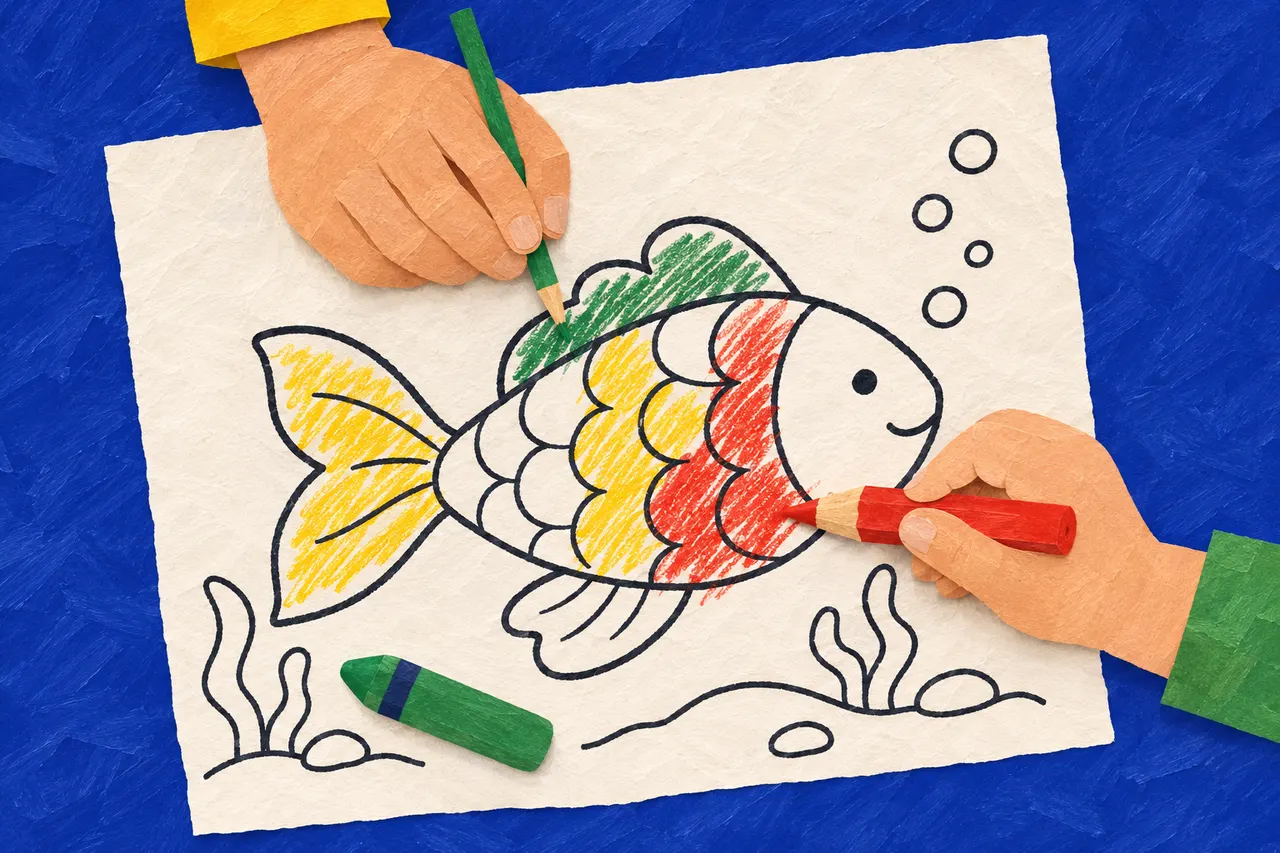
Colouring at every age
From marks made with the whole arm to shading: what helps at each stage, and why the lines are not a test.
More guides
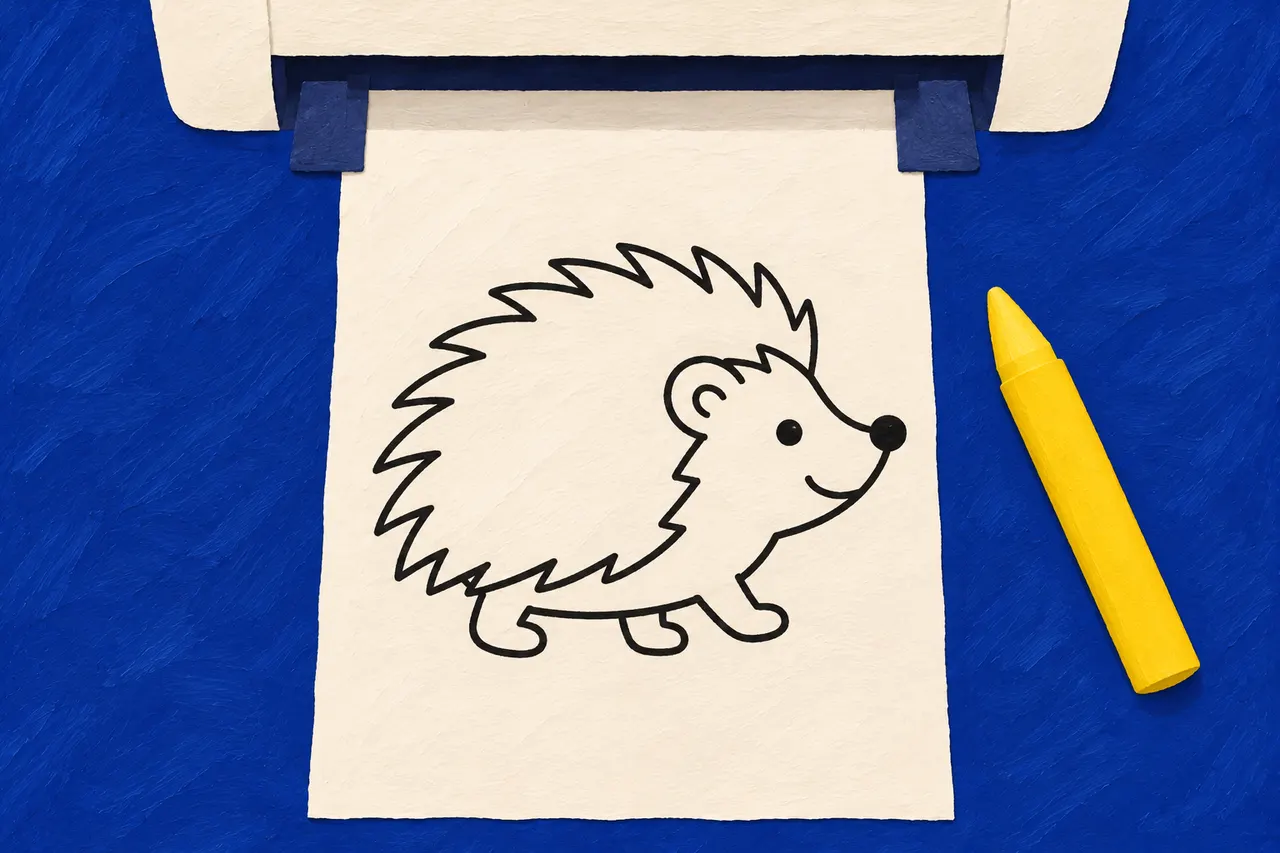
Print a colouring page
From your own picture, the gallery or a private link: the picture alone on A4, which paper suits what, and what to do when the lines come out faint.