Fuse beads
Which beads and pegboards?
Mini, Midi or Maxi, a clear or a white pegboard, and which kinds go together: how to choose beads and a pegboard.
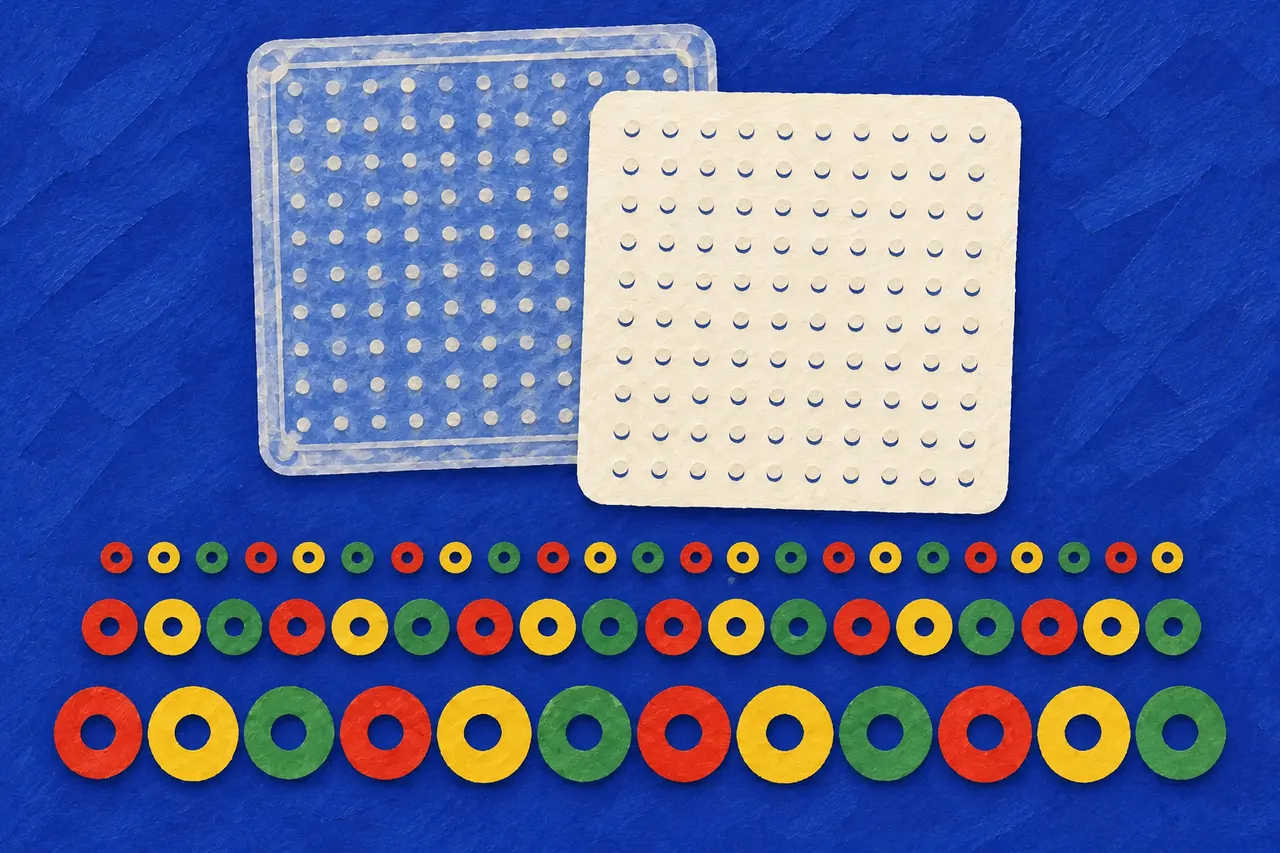
Fuse beads come in several sizes, and each size has pegboards of its own. What matters most is that the beads and the board belong together: the same size, and ideally the same brand.
In short
- Midi, 5 mm, is the most common size.
- Maxi are twice as big and easier for small hands, Mini half as big and fiddly.
- A clear board can lie on top of the pattern. A white board has the pattern beside it.
- Nabbi's BioBeads and Nabbi's ordinary beads are not ironed together.
The sizes
- Mini, 2.5 mm. Small and fiddly, for older children and patient adults.
- Midi, 5 mm. The most common size, made by both Hama (opens in a new window outside Pyssly) and Nabbi (opens in a new window outside Pyssly). Both say 5 and up.
- Maxi, 10 mm. Nabbi makes beads of the same size and calls them Jumbo. Big beads to start with: both say 3 and up.
Our bead patterns are made for Hama Midi, Nabbi Standard and Nabbi BioBeads. Each kind has its own colours, and the board has to fit the beads. Choose the one you have.
Nabbi's two kinds
Nabbi makes its ordinary beads and BioBeads (opens in a new window outside Pyssly), of a different material, which Nabbi describes itself. They look alike but melt differently, and Nabbi says they should not be ironed together. Keep them in separate jars. If they have been mixed anyway, pour them into a bowl of water: according to Nabbi (opens in a new window outside Pyssly), BioBeads sink and the ordinary beads float. Let the beads dry before an adult irons them.
Which board is which?
A pegboard is clear, white or coloured, and that decides how the pattern is used:
- Clear: the pattern can lie under the board, so that each square sits under its peg. Then it is printed at full size, and the size has to be exactly right.
- White or coloured: the pattern does not show through the board, so it lies beside it. Then it is printed enlarged, so that the squares are easy to read.
The bead pattern page asks which board you have, by the maker's model number from the box:
- Hama Midi: 234, white, 29 × 29 pegs; 234TR, clear, 29 × 29 pegs.
- Nabbi Standard: 09332, clear, 30 × 30 pegs.
- Nabbi BioBeads: 09584, white, 30 × 30 pegs; 09332, clear, 30 × 30 pegs.
So a Hama board and a Nabbi board do not have the same number of pegs, and a pattern made for one does not fit straight onto the other. None of the makers states the distance between the pegs. We assume 5 mm, the same as the bead, until we have measured a real board.
There are also round boards, hearts, stars and hexagons. Our bead patterns are made for square boards. According to Hama (opens in a new window outside Pyssly), the large square board can be joined to boards of the same type, and Nabbi (opens in a new window outside Pyssly) says its buildable boards click together. That way a large pattern can lie on several boards at once.
Different brands
Beads of the same size from different brands look alike, but the makers only give advice about their own beads and boards, and beads of different materials melt differently. If you want to mix brands, lay a short test strip and let an adult iron it first, before you lay a whole board.
Hama, Nabbi and other brands belong to their owners. Pyssly is not connected with them.
Next step
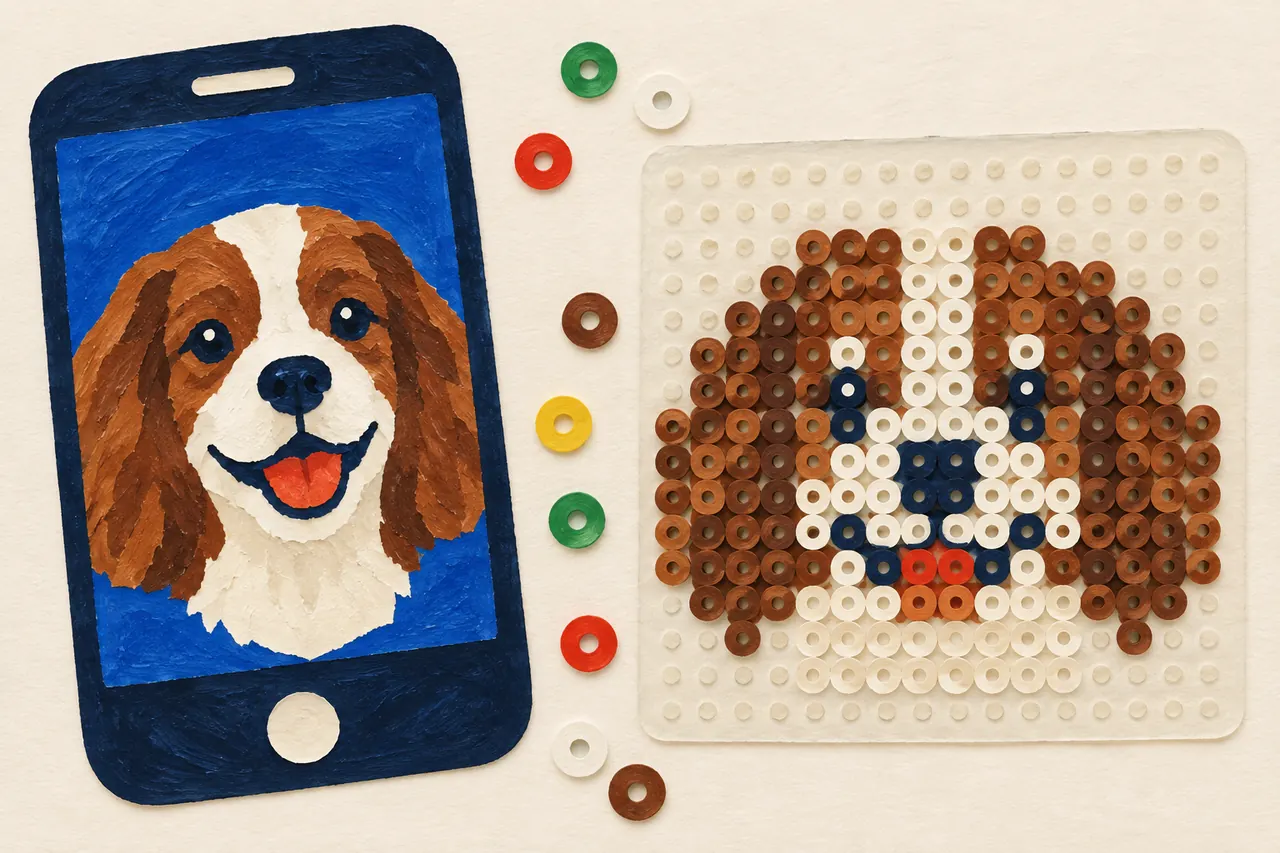
A good bead pattern from a photo
Which photos make good bead pictures, how to crop them and how to choose the size and colours.
More guides
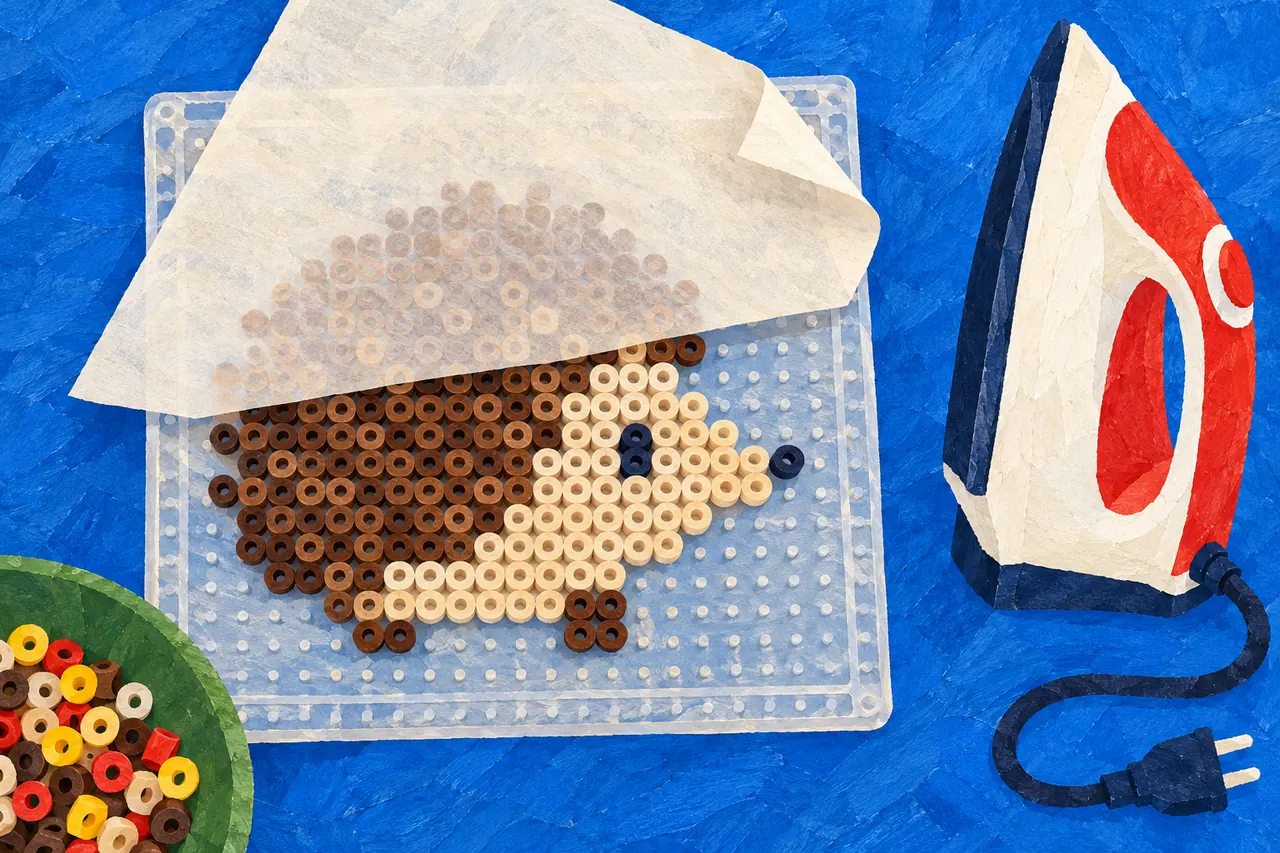
How to make a fuse-bead picture
From pattern to finished picture: lay the beads, let an adult iron them through ironing paper, and let them cool flat.
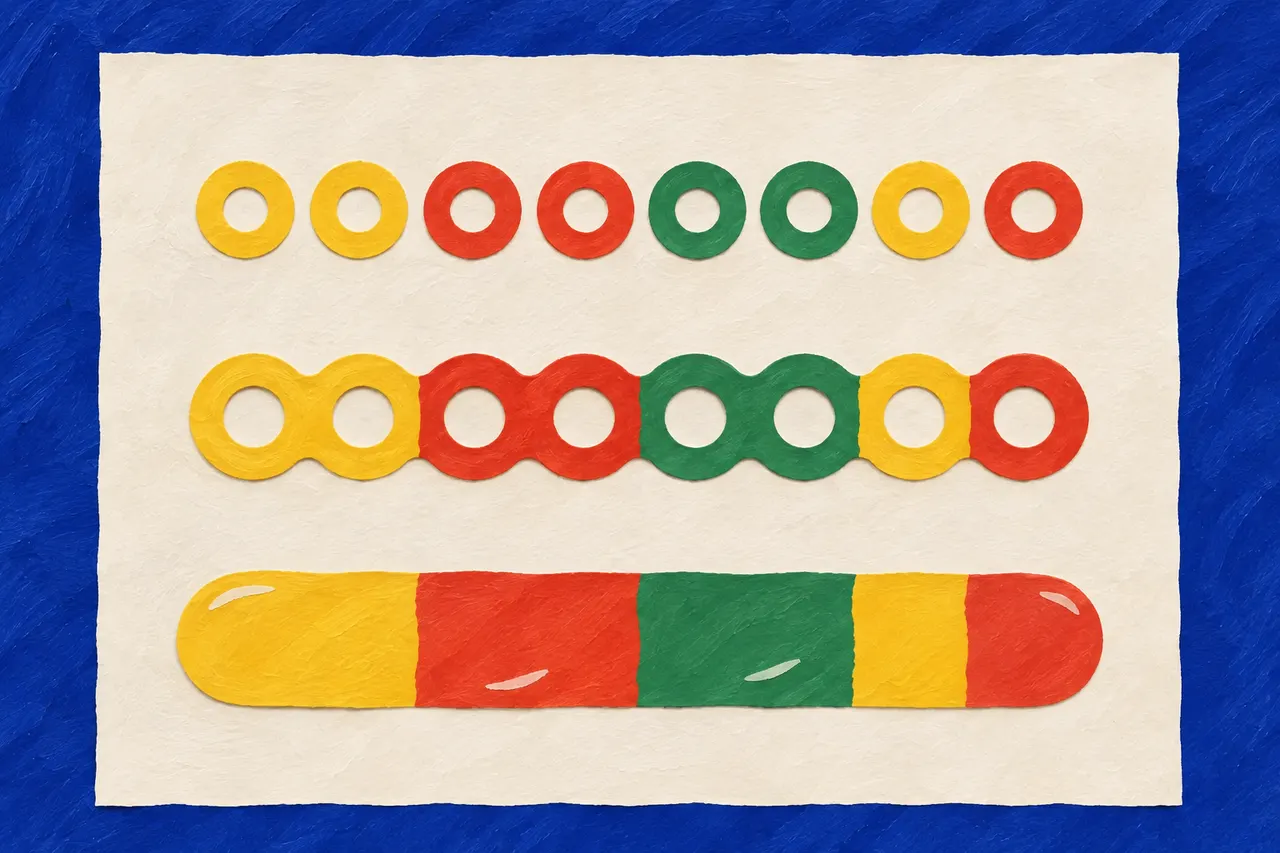
When the ironing goes wrong
Beads that do not hold together, holes that have closed, a piece that has warped: what the makers themselves advise.
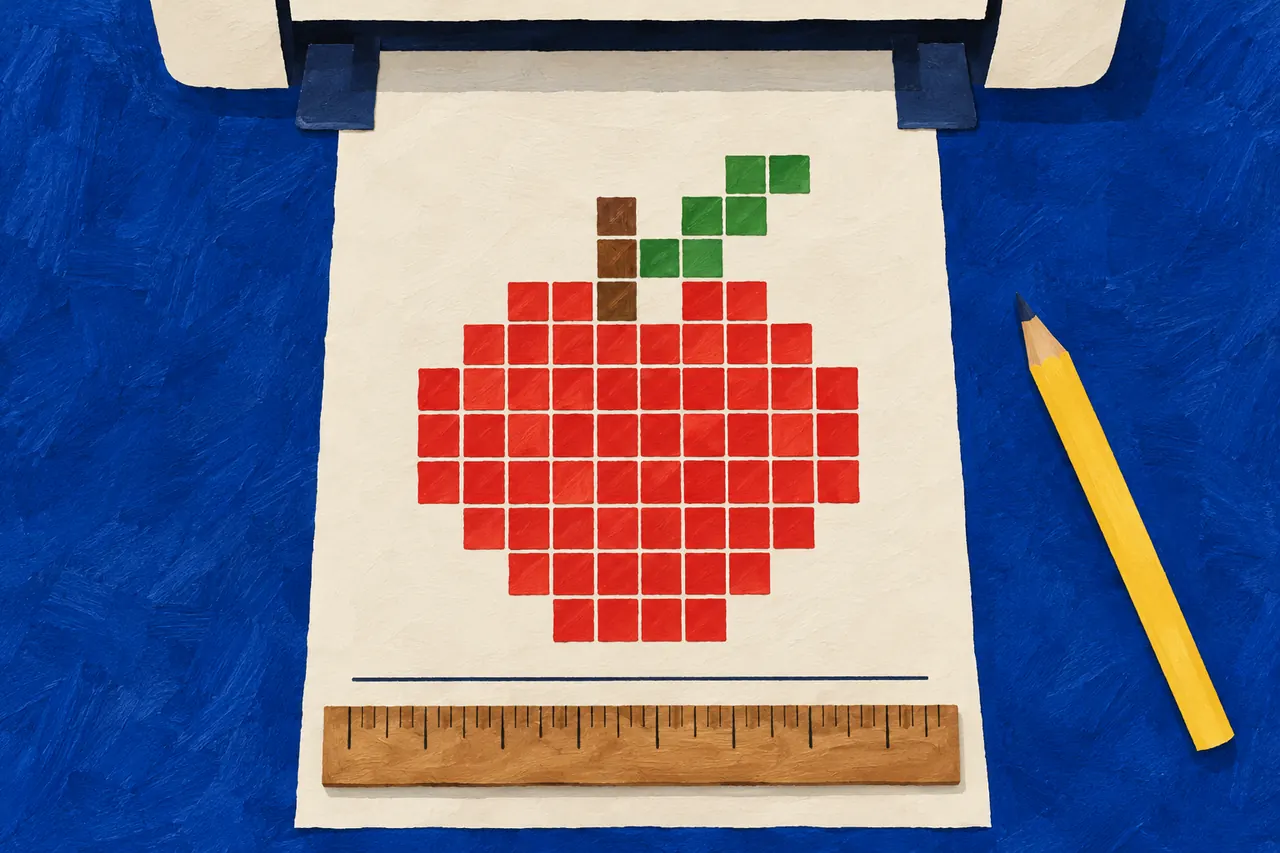
Print at the right size
A bead pattern is printed on A4 at 100 %, not shrunk. How to choose the right settings in your browser, and how to measure the check lines.