Painting and colouring
Colouring at every age
From marks made with the whole arm to shading: what helps at each stage, and why the lines are not a test.
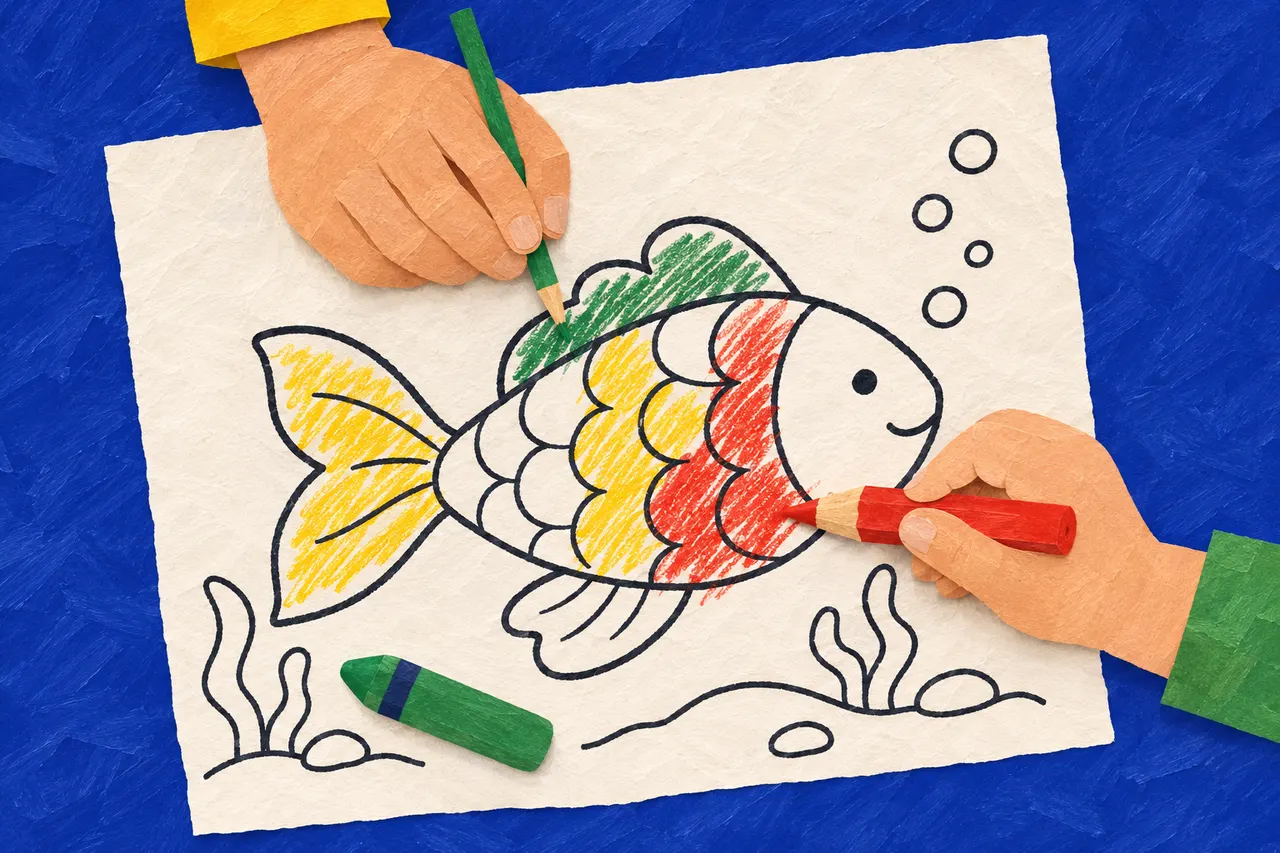
Children colour in stages, not by birthdays. A child of two colours with the whole arm, a child of nine can shade an apple so that it looks round, and in between every child goes at their own pace. These are the stages, and what helps in each of them.
In short
- Short, thick wax crayons first, colour pencils when the child wants to get close to the lines.
- Colouring outside the lines is not wrong. Small areas make it easier to succeed.
- Talk about what the child chose, not just about how nice it turned out.
- Stop while it is still fun.
The stages
Marks with the whole arm
The youngest try out what a wax crayon does, on paper and just as happily on walls and tables. The movement comes from the shoulder. Short, thick wax crayons are the easiest to hold. Show where it is all right to colour, and put a big sheet of paper on the table.
Colour on a thing
The child starts colouring something, a sun or a cat, but the lines do not matter yet and the colours come as they come. Colour together, and talk about the colours you see when you are outside.
The lines start to show
The strokes go in different directions, and the child notices where the lines run, even if the colour does not always stay inside them. Ask which colour to use here, and let the child choose, even when it turns into a purple dog. Sharpened colour pencils make it easier to get close to the lines than wax crayons do.
Filling the space
Now the child fills the areas without so many gaps, and the colours are chosen on purpose. Start with pictures whose areas are small and few, and move on to bigger pictures as the child's stamina grows.
Shading and blending
Older children often want more: colouring lightly first and darker where there should be shadow, or letting two colours meet and blend. It comes when the child wants it, early for some and much later for others.
How the child holds the pencil changes along the way. According to 1177 (opens in a new window outside Pyssly), the Swedish health service's website, some children of three to four hold the pencil between thumb and forefinger, while others still hold it with the whole hand. A grip with three fingers, which most adults have, comes for many children some time between five and seven. All children are different, and it is the child who sets the pace.
The lines
Colouring outside the lines is not wrong, and it is not a test. If the child wants to stay inside them, this can help:
- Fewer and smaller areas, so that each one gets finished.
- Colour the edge of an area first, then fill in the middle.
- Go over the lines around an area with a thick pen, so that the border is easier to see and feel.
- Show that adults sometimes colour outside the lines too, and that it is fine anyway.
What you say
Say something about what the child did and chose: "You used blue for the whole sky" or "Tell me about this one". That says more than "how lovely", and the child hears that you have looked. Unusual colours are a choice, not a mistake.
Which picture suits?
When you make a colouring page of your own, you choose a style. For the youngest, Classic suits, as it is made to be clear. Action has more detail, and Patterns has mandalas and swirls with lots of small areas, for anyone who wants to fill in for a long time. The gallery has ready-made pictures to print, and it is easy to try another if the first was too hard.
Left-handed children
Put the paper a little to the left and tilted the other way from a right-hander's, so that the hand can rest below what the child is colouring and not hide it. Then the lines can be seen, and the hand does not smudge what is already coloured.
How long?
Small children often colour for only a few minutes; older ones can sit for a long time. Stop while it is still fun. A half-finished picture can wait until tomorrow, and a new one can always be printed: print a colouring page.
Next step
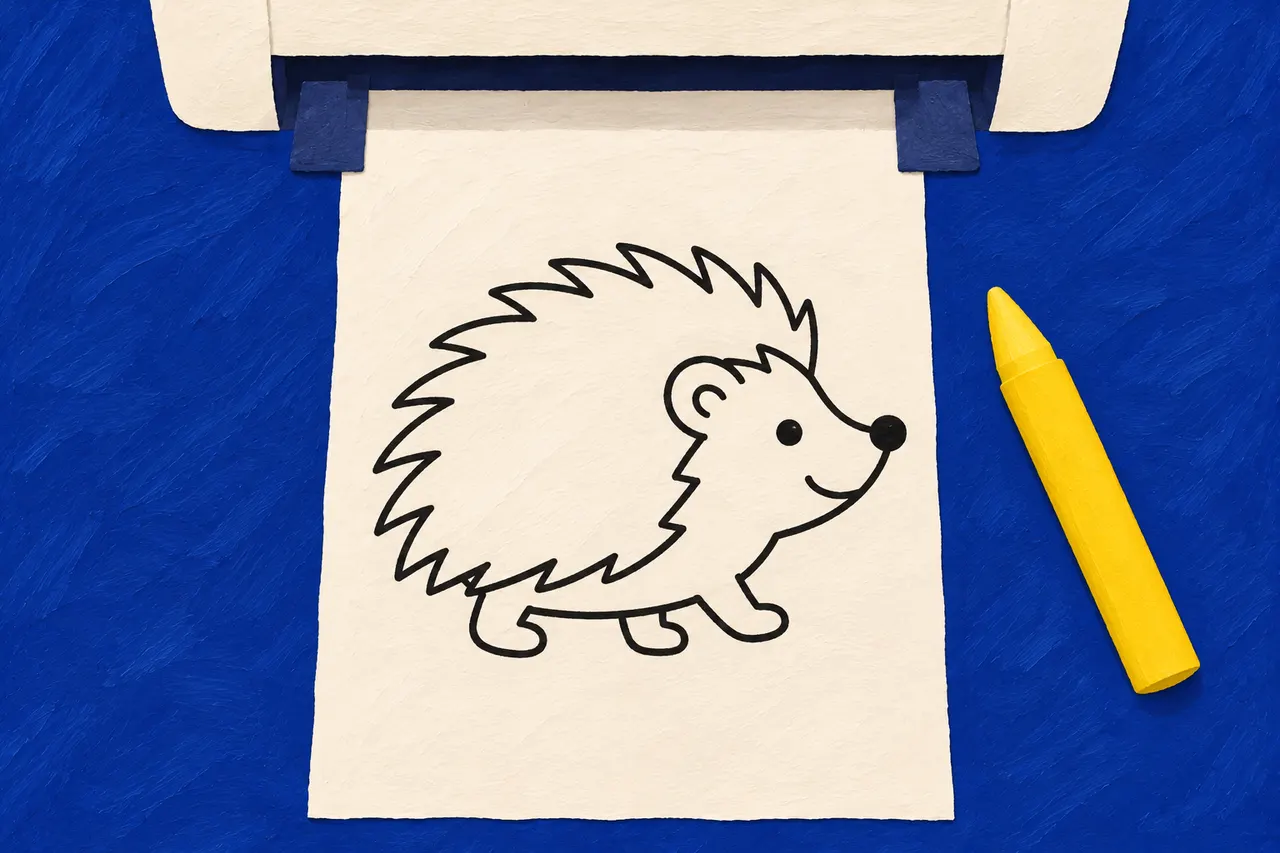
Print a colouring page
From your own picture, the gallery or a private link: the picture alone on A4, which paper suits what, and what to do when the lines come out faint.
More guides
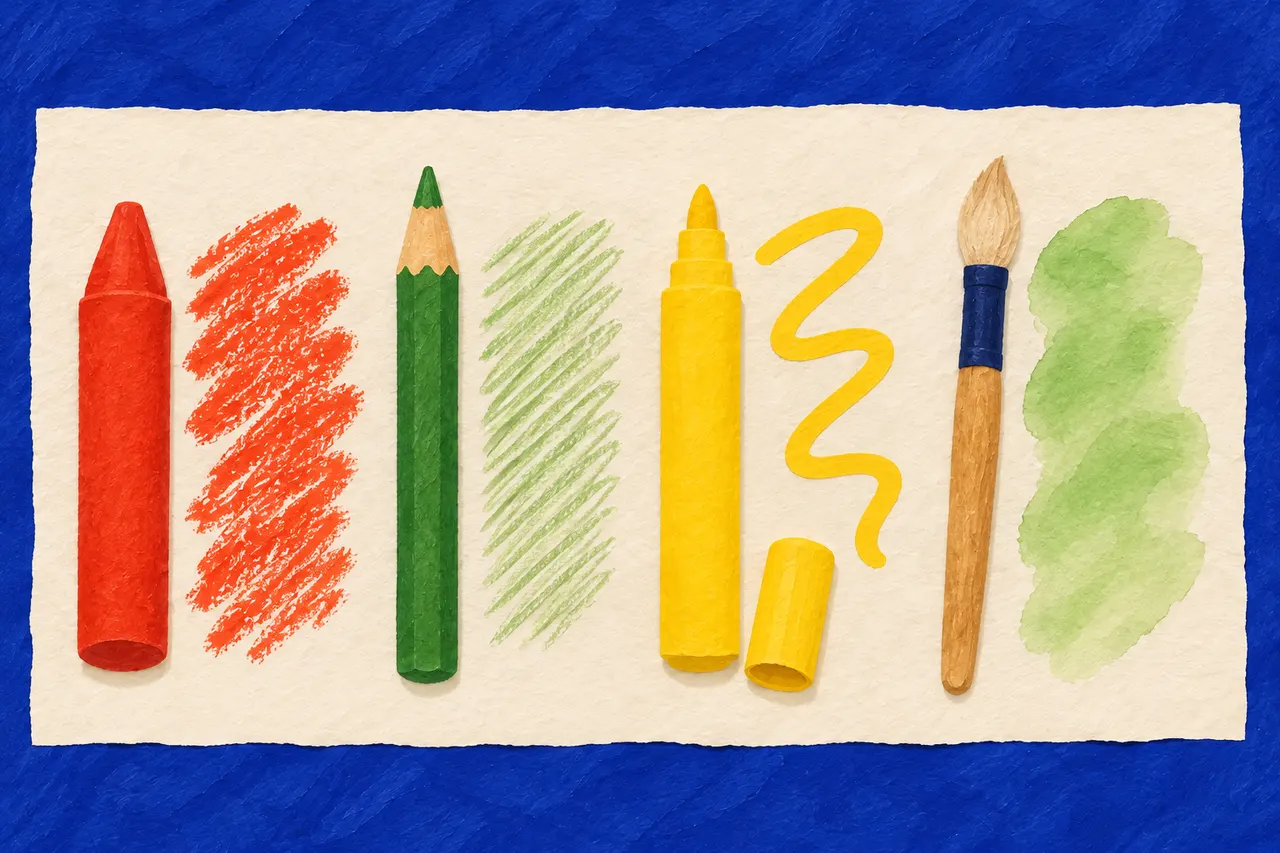
Wax crayons, colour pencils or felt tips?
What suits which age, which paper takes what, and what to do when the colour goes through.