Fuse beads
When the ironing goes wrong
Beads that do not hold together, holes that have closed, a piece that has warped: what the makers themselves advise.
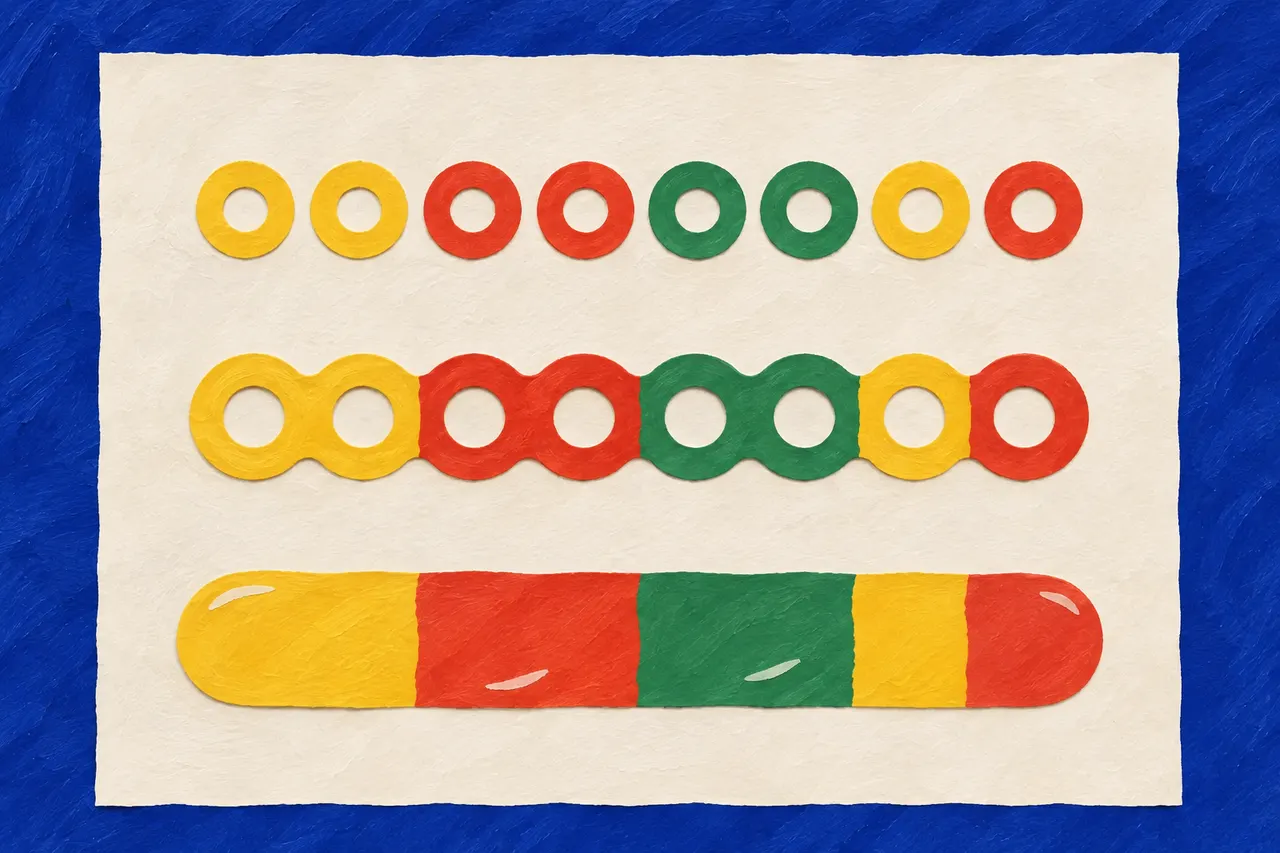
Irons differ, and beads of different brands melt at different speeds. So it does not always come out right the first time, and most things can be put right the next time. Here is what tends to go wrong, by what you see, and what the makers themselves advise.
Is it done?
- Too little: the beads are round with gaps between them, and they come apart.
- Just right: the edges have melted together into one piece, and the holes still show.
- All the way: the holes have closed, and the surface is flat and shiny.
Hama (opens in a new window outside Pyssly) says it is done when the colour of the beads suddenly shows clearly through the ironing paper. Perler (opens in a new window outside Pyssly) wants the edges fused and the holes open. For BioBeads, Nabbi (opens in a new window outside Pyssly) also shows a way with no holes. If you want to attach a ring to the beads, you need to leave a hole for it.
The beads do not hold together
Hama says you can iron once more with the ironing paper if needed, and Perler advises a little more heat when the edges do not fuse. Perler also irons both sides, and Nabbi (opens in a new window outside Pyssly) lifts the beads off and irons the same side once more. Follow what applies to your beads.
The holes have closed
If you want to keep the holes, Perler advises less heat next time, and Hama advises trying a few beads first.
The piece has warped
This is what the makers do so that the beads come out flat: Hama (opens in a new window outside Pyssly) lets them cool for a few minutes on the board and then puts them under a book until they are completely cool. Nabbi lifts them off, irons the same side again and lets them cool under something heavy and flat. Never touch the pegboard itself with the iron: Hama says that damages the pegs.
None of the makers says how to flatten beads that have already cooled curved, so we have no advice on that yet.
The beads fall off before you have ironed
The beads sit loosely on the pegs until they have been ironed. Hama sells a fixing sheet that holds them in place, with instructions of its own. A bead with no neighbour will not hold on after the ironing either, so make sure every bead touches at least one other.
The paper sticks
Let the beads cool for a little while and peel the paper off slowly, as Perler does. If it still sticks, try the paper the maker recommends: Hama's ironing paper; for Nabbi's ordinary beads (opens in a new window outside Pyssly), ideally an oven liner of Teflon fabric, and for BioBeads (opens in a new window outside Pyssly), silicone baking paper.
A bead comes off afterwards
It did not fuse to its neighbours. Hama says you can iron once more with the ironing paper if needed. Follow the instructions for your beads.
It smells burnt
Then the beads have got too hot. Put the iron away and air the room. Hama warns against overheating the beads and advises trying a small design first.
Start again
Did the piece not turn out the way you wanted? The pegboard and the ironing paper can be used again, and the pattern can be printed again. How it is done from the start is in how to make a fuse-bead picture.
Next step
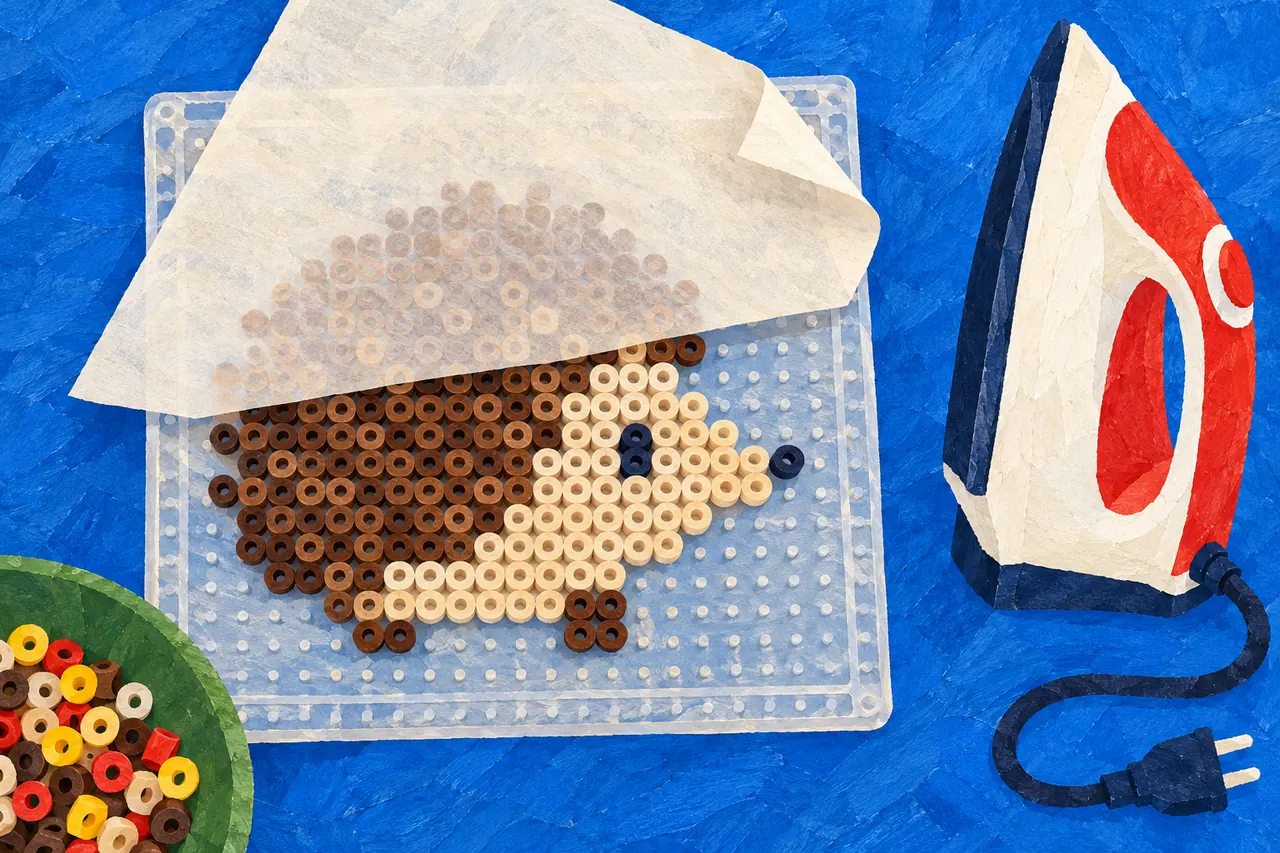
How to make a fuse-bead picture
From pattern to finished picture: lay the beads, let an adult iron them through ironing paper, and let them cool flat.
More guides
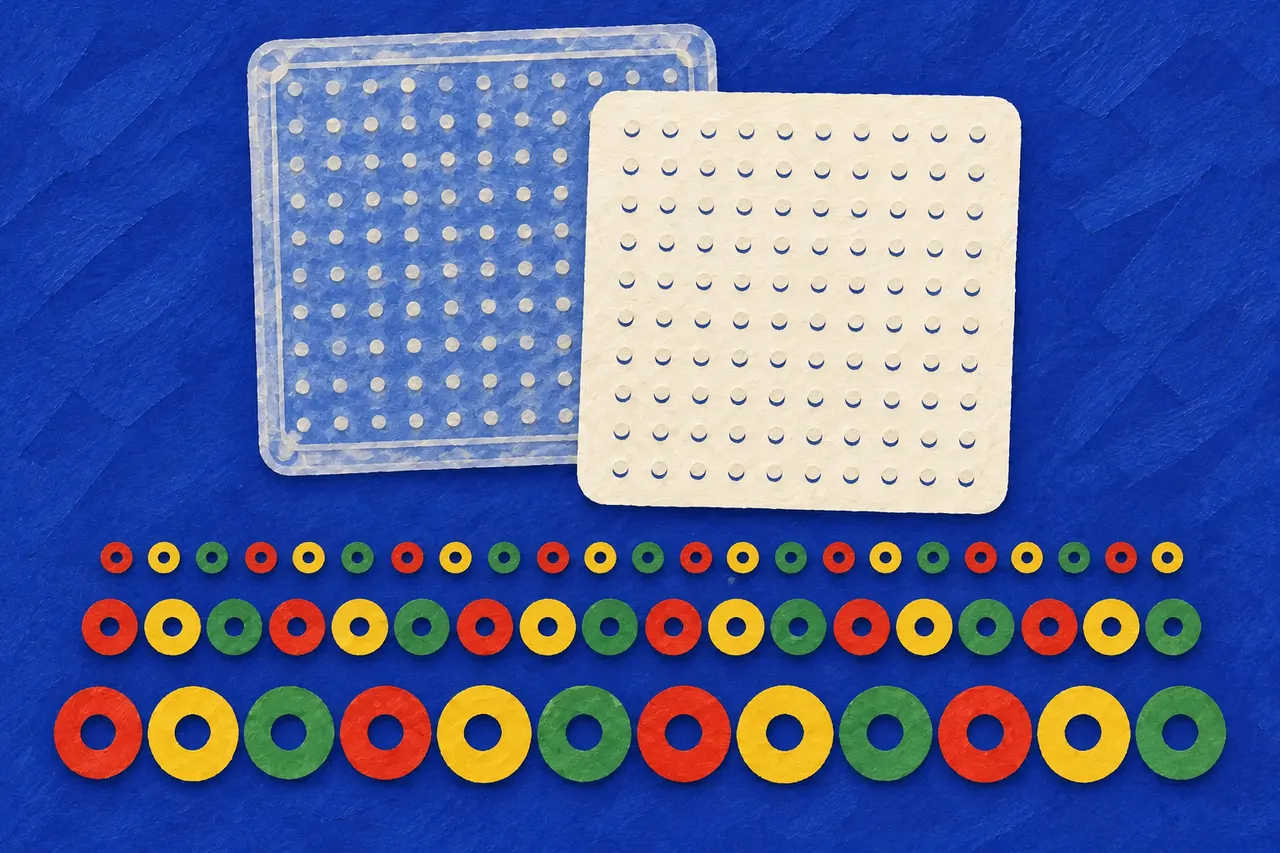
Which beads and pegboards?
Mini, Midi or Maxi, a clear or a white pegboard, and which kinds go together: how to choose beads and a pegboard.
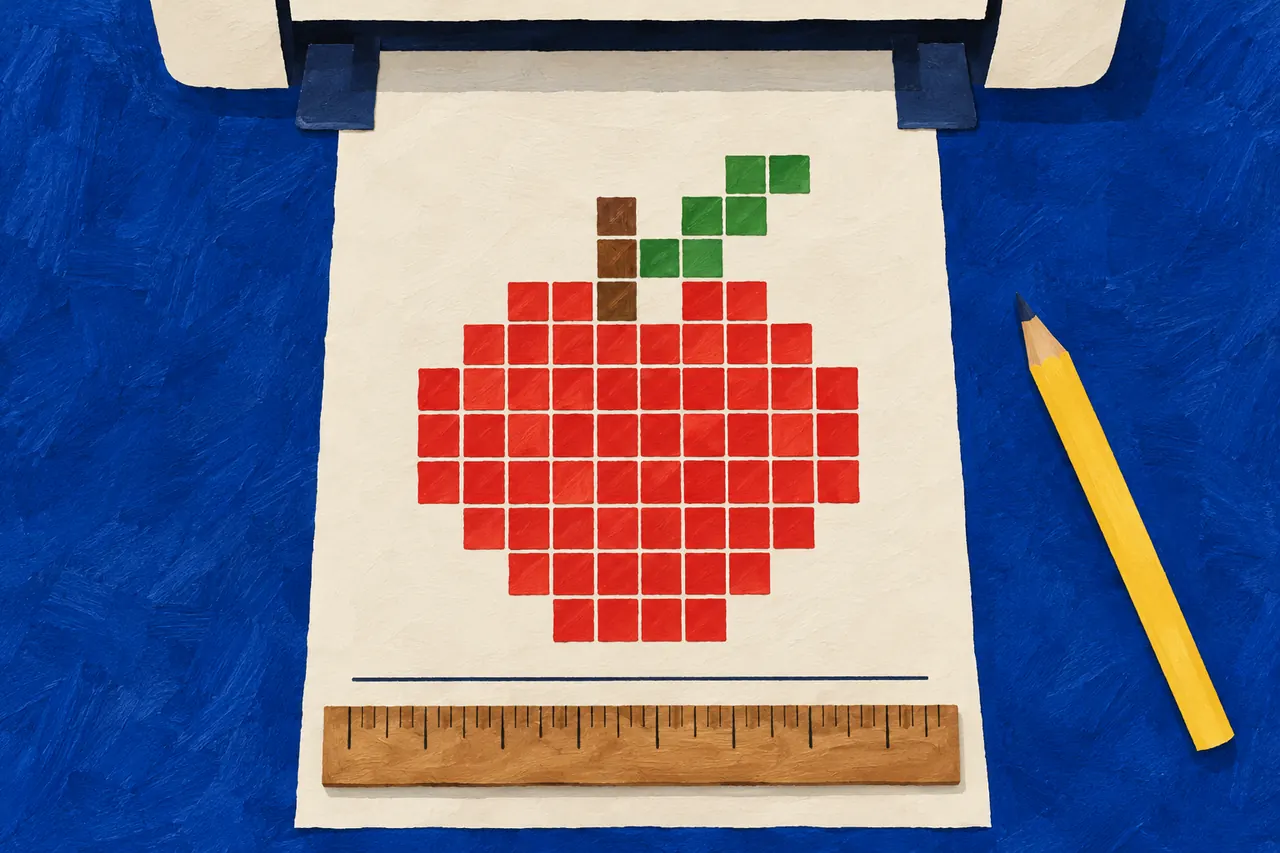
Print at the right size
A bead pattern is printed on A4 at 100 %, not shrunk. How to choose the right settings in your browser, and how to measure the check lines.
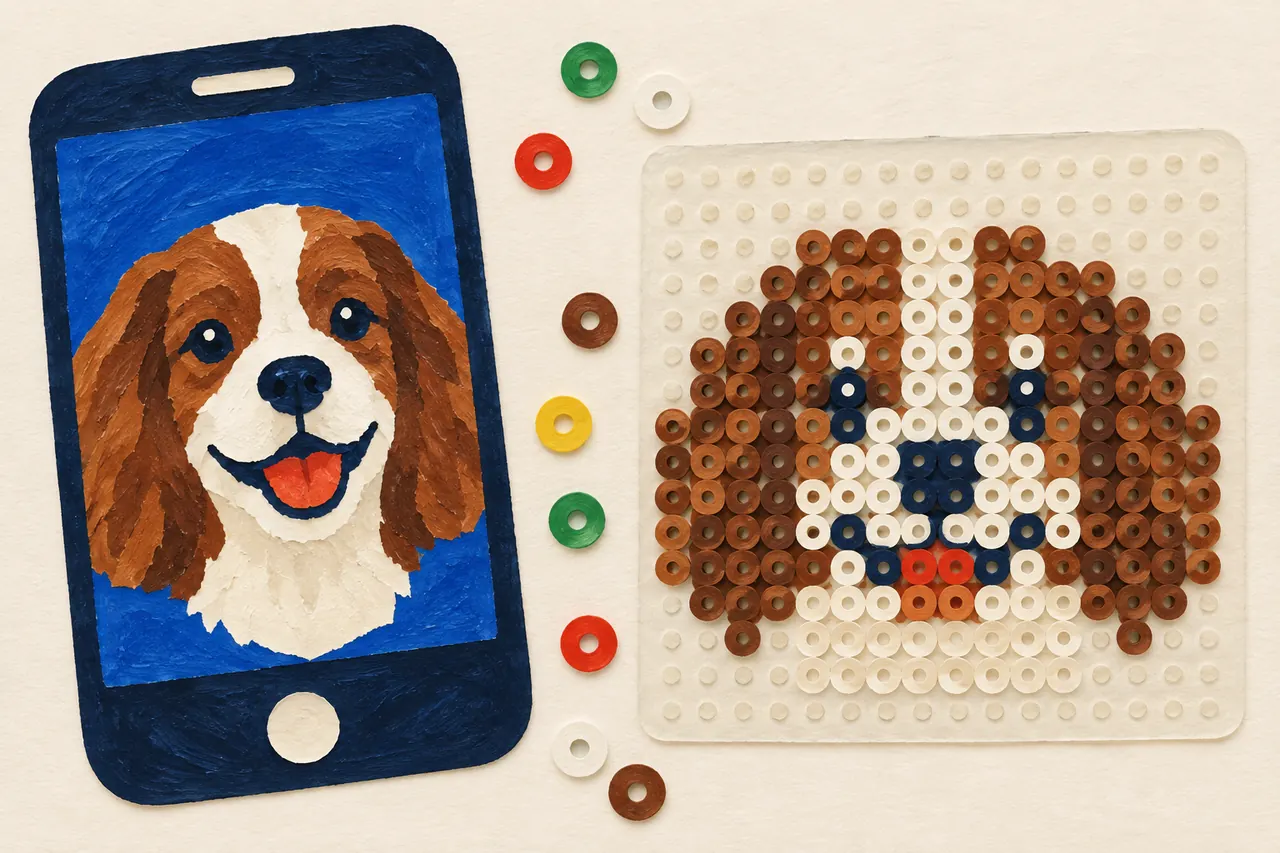
A good bead pattern from a photo
Which photos make good bead pictures, how to crop them and how to choose the size and colours.